The Centerpoint School District again earned an A in the latest school and district letter grades released by the Arkansas Department of Education, while the Caddo Hills and Kirby districts each received a C.
The results for the 2025-26 school year were released Sept. 17 as part of the state’s accountability system, which assigns A-F grades based on student achievement, academic growth and, for high schools and districts, graduation and readiness measures.
Among individual schools in the three districts, Centerpoint Elementary improved from a C to a B, while Kirby Elementary dropped from a C to a D. Centerpoint High School maintained an A, while Caddo Hills Elementary, Caddo Academy and Kirby High School each maintained a C.
Centerpoint
The Centerpoint School District received an A for the second consecutive year, with its overall score increasing from 532.78 points in 2024-25 to 544.27 in 2025-26. Only 10% of school districts statewide received an A.
Centerpoint students exceeded state averages for meeting or exceeding grade-level standards in all three subjects measured. The district had 47% of students meeting that standard in English language arts, compared with 37% statewide; 53% in math, compared with 38%; and 59% in science, compared with 42%.
The district also had a four-year graduation rate of 97%, compared with 92% statewide. In the state’s merit-and-distinction category, which measures whether graduates are prepared for enrollment, employment or enlistment after high school, Centerpoint had 85% meet the standard, compared with 54% statewide.
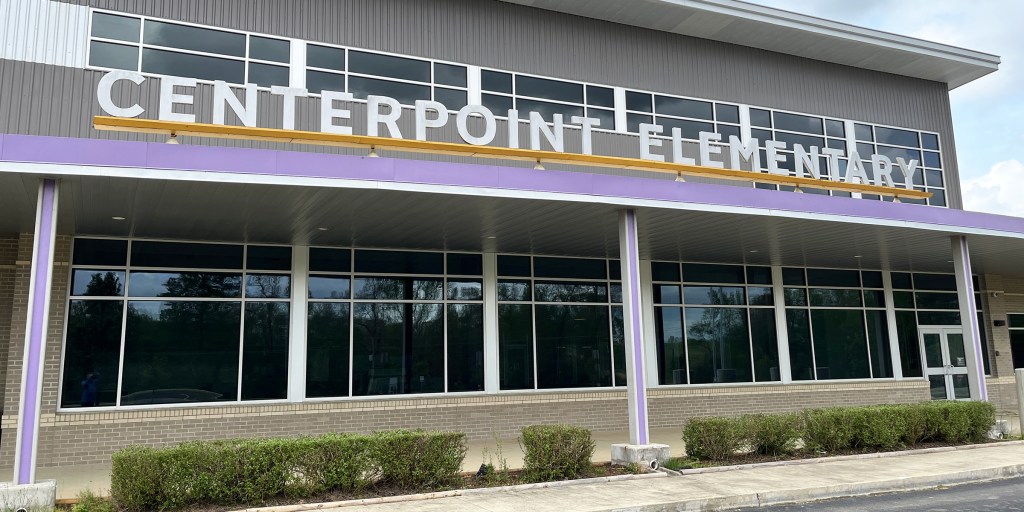
Centerpoint Elementary improved from a C to a B, with its score rising from 427.54 to 445.95. The school was also recognized as an Arkansas Gem School for ranking in the top 10% statewide in science achievement.
At the elementary school, 58% of students met or exceeded grade-level standards in English language arts, 65% in math and 64% in science. All three were above the respective statewide averages of 42%, 45% and 44%.
Centerpoint High School maintained an A, with its score increasing from 533.54 to 542.18. The school exceeded state achievement averages in English language arts, math and science and reported a 97% four-year graduation rate. Eighty-five percent of students met the merit-and-distinction measure.
The district celebrated the news with a post on Facebook.
“We are beyond proud to announce our state accountability results, and the hard work of our students, teachers, and staff has truly paid off,” the district said. “These ratings reflect the dedication of our entire community. To our educators, support staff, students, and families—thank you for making Centerpoint a place where we truly value Every Knight, Every Day.”
Caddo Hills
The Caddo Hills School District maintained a C, although its overall score declined from 452.63 points in 2024-25 to 446.23 in 2025-26.
Despite the C grade, the district exceeded statewide averages for students meeting or exceeding grade-level standards in all three subjects. Caddo Hills had 39% meeting the standard in English language arts, compared with 37% statewide; 46% in math, compared with 38%; and 48% in science, compared with 42%.
Student growth was weaker, with Caddo Hills falling below statewide averages in English language arts/English language proficiency, math and science. The district had a 95% four-year graduation rate, above the statewide rate of 92%.
Caddo Hills Elementary also maintained a C, with its score increasing slightly from 407.28 to 410.41. The school exceeded state achievement averages in math and science but was slightly below the state in English language arts.
Caddo Academy, which is classified with high schools in the state accountability data, also maintained a C. Its score declined from 441.01 to 418.14. The school exceeded statewide achievement averages in all three subjects but fell below the state in overall student growth.
Caddo Academy had a four-year graduation rate of 95%, compared with 91% statewide.
Kirby
The Kirby School District maintained a C, with its score declining from 451.70 points in 2024-25 to 438.88 in 2025-26.
Kirby students exceeded the statewide achievement average in math, with 41% meeting or exceeding grade-level standards compared with 38% statewide. The district was below the state in English language arts and science and also trailed statewide averages in student growth.
The district posted a 100% four-year graduation rate, compared with 92% statewide. 61% of students met the merit-and-distinction measure, compared with 54% statewide.
Kirby Elementary was the only school among the three districts to fall by a letter grade, dropping from a C to a D. Its score declined from 370.28 to 357.86. Statewide, 15% of elementary schools received a D.
The school’s achievement results were stronger than its overall grade might suggest. 53% of students met or exceeded grade-level standards in math, compared with 45% statewide, while 48% did so in science, compared with 44%. In English language arts, 39% met the standard, compared with 42% statewide.
Growth was a weaker area. 37% of students met English language arts/English language proficiency growth targets, compared with 52% statewide, while 47% met math growth targets, compared with 51%, and 31% met science growth targets, compared with 49%.
Kirby High School maintained a C, although its score declined from 433.65 to 424.41. The school had a 100% four-year graduation rate, compared with 91% statewide, and 61% met the merit-and-distinction standard, compared with 52% statewide.
Statewide results
The Arkansas Department of Education reported improvement statewide, with more school districts receiving A and B grades and fewer receiving D and F grades compared with the previous year.
The results mark the second year that schools and districts have been graded under an accountability system developed as part of the LEARNS Act. The system places increased emphasis on student academic growth while also considering achievement and, for high schools and districts, graduation and readiness for college, careers or the military.
Statewide, 26 school districts received an A, while 115 received a B, 87 received a C, 17 received a D and nine received an F. Compared with the previous year, 24 more districts received an A or B, while 12 fewer received a D or F.
Individual schools also showed improvement. The number of schools receiving an A increased from 128 to 141, while the number receiving an F declined from 108 to 72.
Arkansas Education Secretary Jacob Oliva said the results show schools are making progress while giving educators and families a clearer picture of areas needing additional work.
“At the end of the day, LEARNS is working,” Oliva told reporters. “If you’re anti-LEARNS, you’re anti-learning, because the improvements that we’ve made by building out this blueprint and this system are showing more students are performing at or above grade level, which means they’re going to be more inclined to be successfully ready to be enlisted, enrolled or employed, which was the whole goal.”
The Department of Education has said the letter grades are intended to provide families and communities with an easily understood measure of school performance while allowing educators to identify strengths and areas for improvement.
Reporting by Steve Brawner contributed to this story.