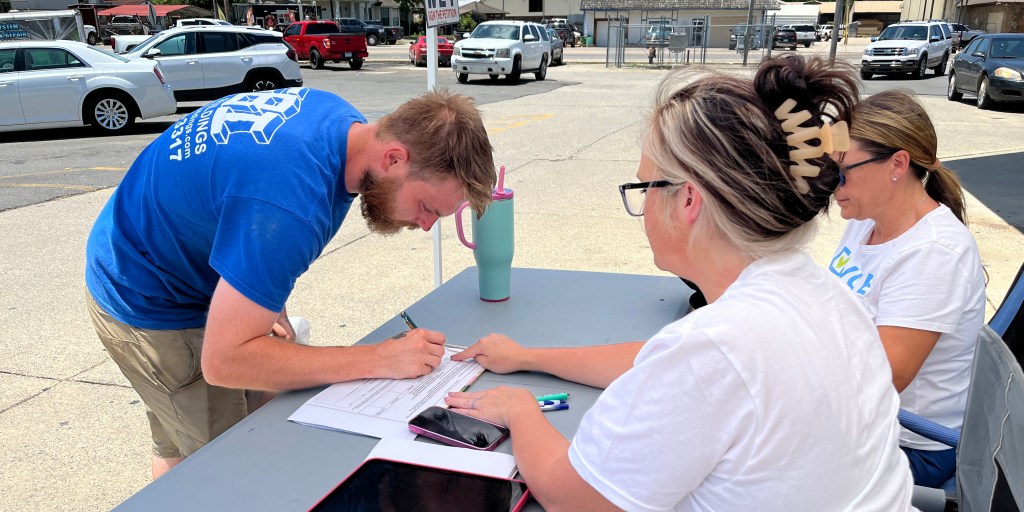
As the temperature hovered around 93 degrees, Tasha Harris and Emily Hamilton were calling out to people going through the entrance of Wright’s Food Center in Glenwood. The pop-up canopy they were sitting under provided only minimal relief from the afternoon sun, with the heat index topping 100. But they were willing to endure the intense heat as a campaign to make Pike County wet is being ramped up.
An Aug. 1 deadline is looming to gather the 2,387 valid signatures needed to place a measure on the November ballot asking Pike County voters whether to allow alcohol sales. At the beginning of the month, the campaign appeared to be lacking momentum, with only 650 signatures reported as of July 2.
Recent donations have enabled the campaign to begin paying people to collect signatures, Harris said. She was one of six paid canvassers as of July 10, while volunteers like Hamilton were also helping with the effort.
One of those who signed the petition that day was Devin York.
“I just think it’s a good idea. Why not? Every other county’s wet around here,” York said.
Harris and Hamilton emphasized to those they approached that signing the petition was not an endorsement of alcohol sales but simply a way to place the issue before voters. Earlier in the day, however, Harris said a woman who declined to sign the petition became visibly upset, explaining that her husband had died from alcohol-related causes.
“We’ve definitely had experiences with people against it, and we totally understand. We are never here to force anybody to do anything they don’t want to do,” Harris said.
She and Hamilton have staffed petition tables at several locations around the county but said Wright’s has proven to be the most productive place. By 2 p.m. on July 10, Harris said they had collected 63 signatures there and hoped to reach 100 by the end of the day.
“Everybody drives through here and they see us. We have people that will pull up and we come to them. I went up to about 10 cars today because they don’t want to get out or they can’t get out,” Harris said. “We just need the signatures.”
Locations where petitions can be signed are posted in advance on the campaign’s Facebook page, 2026 Vote Pike County Wet. Registered voters can also now use a link on the page to submit a confidential request for canvassers to bring petition forms to them.
Harris said paid canvassers and volunteers are also reviewing records of those who signed a petition four years ago, when a similar proposal qualified for the ballot but ultimately failed by six votes. They are trying to identify people who signed the 2022 petition but have not yet signed the current one.
Having additional funding has allowed the campaign to be more strategic, Harris said.
“We’re trained in areas that we can collect the right ones, make sure we’re doing it correctly, and be sure the ones that we are getting actually count toward the total that we need,” she said.
The use of paid canvassers is standard practice for statewide campaigns seeking to place initiatives or constitutional amendments on the ballot. The names of donors to the Pike County campaign are not yet available. Campaign organizer Lisa Harvill of Murfreesboro did not return a phone call or text message from The Glenwood Herald seeking information on donors or an updated signature count.
Hamilton said she and her husband moved to Pike County in 2022 and soon realized the county was losing significant tax revenue as residents and tourists traveled to neighboring wet counties to purchase alcohol.
“We need the tax revenue here. This is a recreational county,” Hamilton said. “If people are already going to bring alcohol into our county, why not let us be able to sell it here and get the tax revenue to help the municipalities, the county, the roads, the schools and the police?”
Supporters have also argued that allowing alcohol sales could encourage additional restaurants to open and expand dining options in downtown Glenwood. The National Restaurant Association reports liquor markups often range from 400% to 500% above wholesale cost, making alcohol an important source of restaurant revenue.
A chance encounter overheard by a reporter for The Glenwood Herald illustrated what some visitors are seeking. After tubing on the Caddo River on July 3, Little Rock residents Mike Wisinger and his wife walked into Mercantile on Broadway, where he asked whether there was a nearby place to get a draft beer. Specifying draft beer seemed to suggest he was looking for a place like a bar or restaurant where he could sit down to enjoy it.
Owner Kayla Hartsfield told him no, explaining that Pike County is dry. She gave him directions to Slate Rock Brewing in Amity, which is part of Clark County and would be a 10-minute drive. Wisinger said he would skip that and instead head home, where he planned to have a beer that evening.
“It would have been nice to just have one,” Wisinger said, “but I’ll survive.”
He said he knew Arkansas still had dry counties but had forgotten Pike County was one of them because he does not visit Glenwood often.
“I would think with all the people that come in and float, it would be good. Somebody would make some money,” Wisinger said.
After learning that a similar proposal had narrowly failed four years earlier, Wisinger said the decision ultimately belongs to county voters.
“It’s a shame for the people on the wrong side of the six votes, but I think that’s the way it should work,” he said. “If more people don’t want it, then you don’t have it, and if more people want it, you do.”
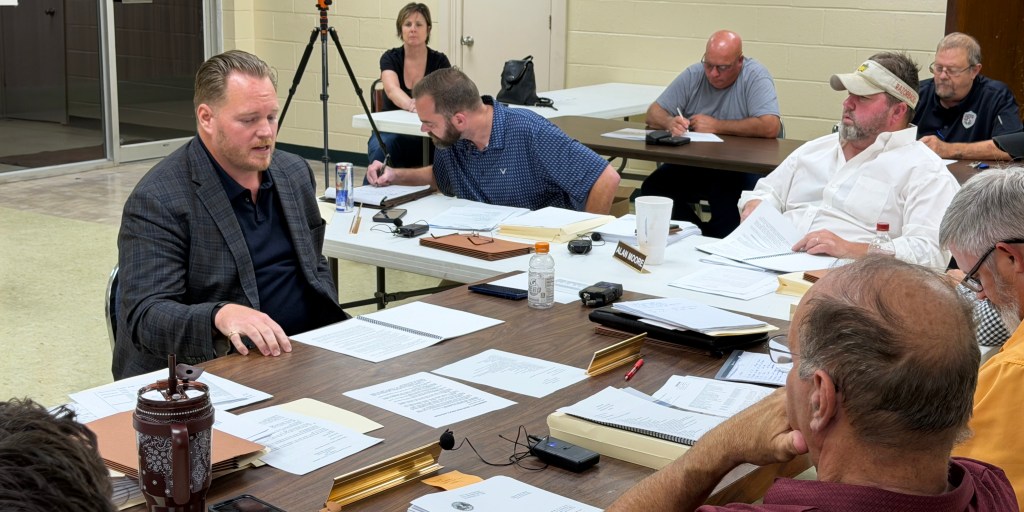
At the Glenwood City Council’s June 29 meeting, several members suggested the proposal’s passage appears likely if it reaches the ballot. However, concerns were raised about whether the city’s police department — which currently has three full-time officers and one part-time officer — is prepared for problems that Councilman Alan Moore said would inevitably accompany alcohol sales. Moore said that if the measure reaches the ballot, he will vote against it.
RELATED STORIES: