Repairs to 24 city-owned buildings damaged during a hailstorm earlier this year are estimated to cost more than $630,000, according to insurance records obtained through a Freedom of Information Act request by a Glenwood resident who says the city should give contractors an equal opportunity to compete for the work.
The City Council was scheduled to hold a work session Monday, Oct. 19, to consider opening the projects for bids, but the meeting was postponed due to an illness.
The documents provide the most detailed accounting yet of damage from the April 25 storm, with the largest individual claims involving Bainum Library, City Hall, water treatment plant and street maintenance facilities.
The records show that the Arkansas Municipal League’s Municipal Property Program issued insurance checks totaling $525,196.76, with most dated Aug. 26.
An additional $92,174.74 in depreciation was withheld from the initial payments but could potentially be recovered once qualifying repairs are completed and the required documentation is submitted.
However, the records also identify $13,628.22 in deductions and coverage limitations that may not be recoverable, including a $7,500 deductible on City Hall and a coverage limitation affecting a sewer chemical storage building.
The estimates were prepared by GarnerHill Ltd. of Hot Springs Village, with inspections conducted in late July and estimates completed in early August.
Resident sought detailed accounting
Glenwood resident Rhonda Eleazar, who records and uploads videos of each City Council meeting to YouTube, said she became interested in the claims while at the Oct. 8 meeting, where members debated how to proceed with repairs.
She has worked in the insurance industry for more than 35 years and noticed that council members had thick manila folders labeled “Property Damage Insurance Claims” in front of them.
“I was like, ‘Ooh, I’d really like to see that,’ mainly out of curiosity, but just to see at what point are we in this claim process,” she said.
She submitted a Freedom of Information Act request to the city seeking everything contained in the folders.
Eleazar, who has an insurance adjuster’s license but does not currently work as an adjuster, said she was familiar with the estimating software used to calculate damages. Her home also sustained damage in the storm, and she had to deal with a claim of her own.
The city clerk responded promptly, Eleazar said, making the documents available within about 30 minutes. She paid about $60 to cover the cost of printing the records. Eleazar subsequently provided the records to The Glenwood Herald for review.
Insurance payments and possible additional costs
The insurance documents show that the estimated replacement cost of the damaged buildings is higher than the amount initially paid by the insurer.
Eleazar explained that insurance companies commonly issue payments based on actual cash value, which accounts for depreciation, and release additional funds after repairs are completed. She said the estimates are a starting point and that additional damage is sometimes discovered after contractors begin removing roofing materials.
The documents also specify that additional work or expenses beyond the estimates must be approved by a representative of the Arkansas Municipal League.
Eleazar said another potential expense involves changes the city might want to make to some of the damaged buildings.
During the Oct. 8 meeting, Mayor Billy Plyler discussed the possibility of using different roofing materials on some structures rather than replacing them with the same kind of materials.
Eleazar said insurers generally pay to replace damaged materials with those of comparable type and quality, meaning the city could be responsible for the additional expense of upgrades.
“The insurance company’s only going to pay like kind and quality,” she said.
For example, she said, replacing standard shingles with more expensive architectural shingles could require the property owner to pay the difference.
“Somebody’s going to have to do a change order,” she said.
She distinguished between supplemental insurance claims for additional covered damage and changes that would increase the cost of repairs without necessarily qualifying for additional insurance payments.
Extensive damage across city facilities
The largest individual estimate is $101,840.60 for the library building, where the proposed work includes replacing about 6,039 square feet of metal roofing and nearly 400 linear feet of gutters and downspouts.
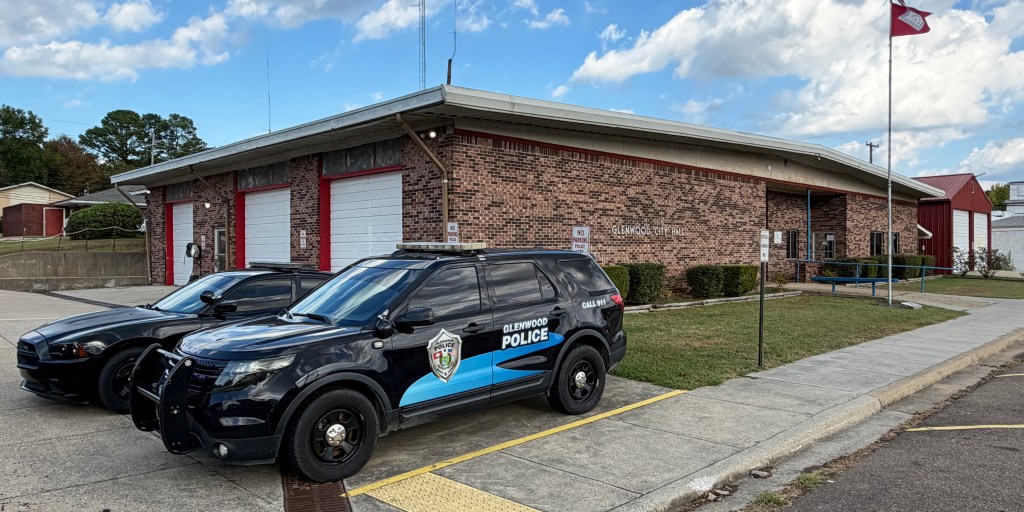
City Hall has the second-highest estimate at $94,084.48. The work includes replacing about 7,031 square feet of roofing, consisting primarily of metal roofing with a smaller section of composition shingles.
Two additional parts of the City Hall complex, the fire station and fire station office, have separate estimates, with repairs totaling $26,091.17. Combined with the other City Hall estimate, total damage is estimated at $120,175.65, making it the most expensive location in the records.
The city’s street maintenance complex at 501 N. First St. has the second-highest combined estimate. Repairs to the main maintenance building are estimated at $62,045.63, while a separate storage building has an estimate of $45,969.91, bringing the total for the two structures to $108,015.54.
The water treatment plant at 327 N. First St. has estimated repairs of $68,050.26, primarily involving metal roofing and gutters. A separate transfer pump station at the same address has an estimate of $6,095.70.
Most of the damage documented in the insurance estimates involves roofs, gutters and other exterior components. However, some buildings also have damage to siding, windows, doors and exterior equipment.
The Water and Sewer Office at 122 Fagan St., with estimated repairs of $52,778.46, is among the few buildings where the documents identify interior work. The estimate includes repairs to ceiling tiles and insulation in the main lobby, a bathroom and an office.
Other facilities with substantial damage include the John Benjamin Pavilion, with estimated repairs of $38,811.48, and a blower and laboratory building associated with the city’s wastewater system, with estimated repairs of $30,945.50.
Five pump stations have combined estimated repairs of $21,105.95. Those estimates primarily involve replacing the roofs of the buildings housing the equipment.
The records also show that insurance payments will not necessarily cover the full estimated cost of every repair.
For example, the sewer chemical storage building on Pristine Lane has an estimated replacement cost of $10,144.06, but the insurance payment was limited to $4,120 because of a coverage restriction. The difference is $6,024.06.
City Hall’s claim includes a $7,500 deductible, reducing the maximum estimated insurance recovery for that building to $86,584.48.
Debate over competitive bidding
At its Oct. 8 meeting, the City Council heard a presentation from Jason Edwards, owner of Edwards Company Group, which operates in several Arkansas cities. He discussed the company’s ability to mobilize quickly and handle the work under a single arrangement. Edwards also suggested the city could use an emergency proclamation to expedite the repairs rather than following the usual competitive bidding process for all 24 claims.
Some council members expressed interest in giving local contractors an opportunity to submit bids, while Edwards emphasized the advantages of coordinating the work through a single company.
The council decided not to make a decision at that meeting so that additional discussions could take place. After the postponement of the Oct. 19 work session, it’s unclear when a decision will be made.
Eleazar said she was concerned that Edwards’ company had already inspected the buildings and obtained detailed information while another contractor was attending the meeting seeking an opportunity to bid.
“It was just two ends of the spectrum. One already had it, and one was just coming in on the scene,” she said. “I just really felt like I wanted an even playing field.”
The agenda had not been posted on Facebook before the meeting, as is typically done, and Eleazar did not know the contractor presentation was going to take place. She disagreed with suggestions from Mayor Plyler that preparing specifications and seeking bids for the 24 claims would be a challenge for the city.
“I really don’t think it would be that difficult to come up with some good specs,” she said.
She noted that the city already works with professionals who prepare bid specifications for grant-funded projects along with water and sewer improvements.
“So even if you have to farm that out or contract that out for somebody to do the bid specs, then that’s what you have to do,” she said.
Although she raised questions about the process, Eleazar said she was pleased with the council’s decision to schedule an additional meeting rather than immediately selecting a contractor.
“The resolution of that meeting,” she said, “was perfect because they actually scheduled a planning meeting.”
Public access to city government
Eleazar said she has lived in Glenwood about five years. She began recording videos of council meetings in January 2023 and uploads them to her YouTube channel, Rhonda’s 2 Cents, to help residents who cannot attend stay informed about city business.
“I look at it as a public service, something I can do,” she said.
She maintains a list of elderly and homebound residents to whom she sends direct links to the recordings. Other viewers include people who work outside Glenwood or have family responsibilities that prevent them from attending meetings.
She said her interest in city government is rooted in a sense of responsibility rather than dissatisfaction with local officials.
“I feel an obligation to the city that I live in to be involved and to understand what’s going on with tax dollars and expenses and things like that.”
Estimated repairs by city property
The following amounts are estimated replacement costs, not contractor bids. They include materials, labor, applicable taxes and other expenses identified in the insurance estimates obtained by Eleazar.
- Library Building: $101,840.60 — Metal roofing, gutters and downspouts.
- City Hall: $94,084.48 — Metal and composition-shingle roofing, gutters and downspouts.
- Water Plant: $68,050.26 — Metal roofing, gutters, downspouts and exterior components.
- Street Shop/Maintenance Building: $62,045.63 — Metal roofing, gutters and downspouts.
- Water & Sewer City Hall Office: $52,778.46 — Roofing, gutters and interior ceiling repairs.
- Maintenance Shop Storage Building: $45,969.91 — Metal roofing, gutters and downspouts.
- John Benjamin Pavilion: $38,811.48 — Metal roofing, insulation and gutters.
- Blower & Lab Building: $30,945.50 — Metal roofing, exterior door, ventilation and equipment components.
- City Hall Fire Station: $20,730.83 — Roofing and related repairs.
- Depot: $20,389.12 — Composition-shingle roofing, gutters and window screens.
- Animal Shelter: $16,358.61 — Roofing and exterior repairs.
- Animal Shelter Modular Trailer: $15,579.23 — Roofing, siding, gutters and window screens.
- City Park Bathrooms: $10,701.41 — Metal roofing and related components.
- Sewer Chemical Storage Building: $10,144.06 — Metal roofing and related components.
- Transfer Pump Station: $6,095.70 — Roofing repairs.
- City Hall Fire Station Office: $5,360.34 — Roofing and related repairs.
- Park Pavilion Gable Roof: $5,314.10 — Composition-shingle roofing.
- Park Pavilion Storage Shed: $4,507.78 — Metal roofing and removal of underlying shingles.
- Highway 70 Pump Station: $4,215.28 — Composition-shingle roofing.
- Twin Bridges Pump Station: $4,081.93 — Composition-shingle roofing.
- Generator Building, Pristine Lane: $3,776.99 — Composition-shingle roofing.
- Pump Station, Caddo Hills School: $3,682.52 — Roofing repairs.
- Kennedy Road Pump Station: $3,030.52 — Composition-shingle roofing.
- Water and Sewer Office Storage Building: $2,504.98 — Composition-shingle roofing.
Total estimated replacement costs: $630,999.72.
AI was used to assist in reviewing and compiling information from the 24 insurance documents obtained through a Freedom of Information Act request. The reporting, interviews and editorial decisions were made by The Glenwood Herald.