With Election Day approaching Tuesday, U.S. Rep. Bruce Westerman says the outcome of the battle for control of Congress remains uncertain, with voter turnout likely to determine whether Republicans retain their majorities in the House and Senate.
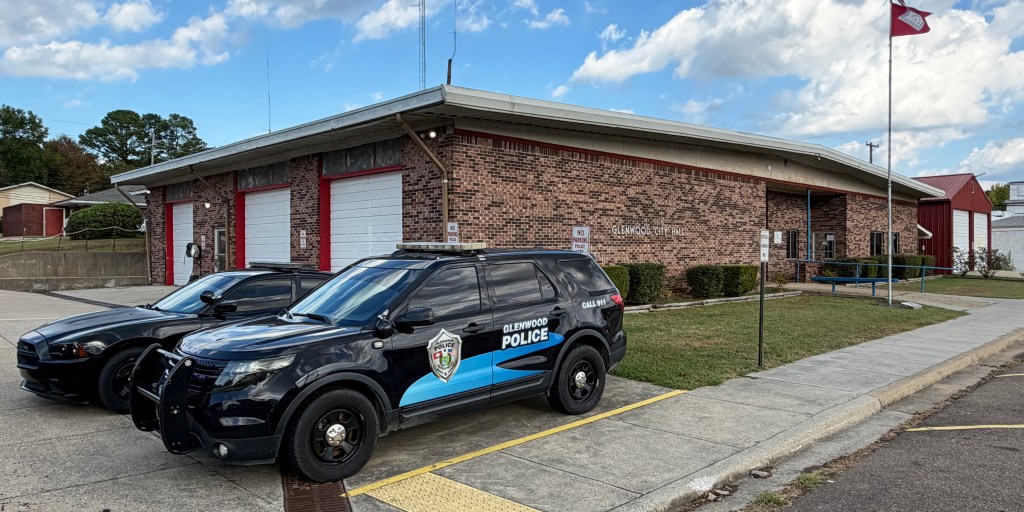
“It’s hard to say this time,” Westerman said in an interview with The Glenwood Herald on Tuesday, Oct. 27.
“I know that if Republicans are going to maintain a majority, our base has to get out and vote. If our base stays home, then we could lose the majority of both the House and the Senate. If they get out and vote across the country, then we could maintain our majority.”
Westerman, a Republican from Hot Springs who has represented Arkansas’ 4th Congressional District since 2015, is seeking another term against Democrat James “Rus” Russell.
Westerman said he believes between 15 and 40 congressional seats nationwide could be particularly competitive, with turnout determining the outcome.
“The best poll is always the one that comes in on the first Tuesday in November,” he said.
Westerman won reelection in 2024 with nearly 73% of the vote. The 4th District, which includes Pike County and much of western and southern Arkansas, has remained strongly Republican.
Russell, a Little Rock mental health care provider who previously sought the Democratic nomination for governor in 2022, has emphasized affordability, health care and limiting executive power during his campaign.
In an Oct. 14 interview with Arkansas Advocate, Russell said he wants Congress to reassert its authority over tariffs, reduce corporate influence in politics and address rising costs. He also advocated a Medicare-for-all health care system, contrasting with Westerman’s approach to health care reform.
Westerman, a forester who chairs the House Natural Resources Committee, said he remains focused on several legislative priorities that he hopes Congress will address after the election.
Among them is permitting reform, which he said could reduce delays and uncertainty for energy, infrastructure and other development projects.
“I had a bill last December that we passed out of the House with bipartisan support,” Westerman said.
He pointed to a bipartisan permitting agreement announced by Senate lawmakers shortly before the October recess and said he hopes the legislation will be among the first matters considered when Congress returns.
“When you talk about what we can do to affect the high cost of stuff, changing the way we do permitting — not changing the requirements or the guidelines, but the timing that you do them and the certainty that you have in permits — can greatly help all of the country,” he said.
Westerman also expressed frustration that the House adjourned for its election recess two weeks earlier than originally scheduled.
“That was not my idea, and I wasn’t in agreement with it, but it was out of my control,” he said. “I wish we would have stayed there and gotten more work done.”
Other priorities he identified include the Fix Our Forests Act, which seeks to accelerate forest management projects and reduce wildfire risks, along with a farm bill, government funding legislation and defense authorization and appropriations measures.
Westerman said the act has bipartisan support and could pass in the Senate if brought to a vote.
“We’ve still got the farm bill to work on. We’ve got government funding. There’s a whole host of things that need to be voted on,” he said.
One of his latest legislative proposals is the bipartisan Strong American Wood Act, introduced Oct. 22 with Democratic Rep. Marie Gluesenkamp Perez of Washington.
The measure is intended to strengthen domestic markets for lumber and other wood products, an industry Westerman said is especially important to Arkansas.
“Lumber, both hardwood and softwood, and pulp and paper are very important to Arkansas’ economy and also to Arkansas’ forest health,” he said.
Westerman expressed concern about mill closures across the country and said maintaining markets for domestic timber is important to forest management.
“If we can make sure we have fair, competitive markets for our wood products, that means we can continue to manage our forests and ultimately have better air quality, better water quality and better wildlife habitat by having healthy forests,” he said.
The proposal also includes provisions aimed at increasing housing construction using American-produced wood.
Westerman said the legislation would use revenue collected from tariffs and countervailing duties on Canadian softwood lumber to establish state-administered financing programs for housing built with domestic timber.
In Arkansas, he said, the Arkansas Development Finance Authority could administer such a program. The money would be structured as a revolving fund, allowing repayments from housing projects to finance additional construction.
Westerman said the approach could help address the nation’s housing shortage while creating demand for American wood products.
“Home construction is really the bellwether for forest products, and if we can get more people building homes, that helps a lot of issues,” he said. “That helps forest products and forest health, and it also helps people get into an affordable home.”
The legislation was introduced late in the current congressional session, leaving limited time for passage before the new Congress convenes in January. Westerman said he hopes to advance the measure this year but would reintroduce it if necessary.
“I wish to get it done this year, but if it doesn’t pass, I’ll certainly reintroduce it and try next year,” he said. “As you and most people are aware, getting an act of Congress is not an easy task.”
Westerman said the legislation’s bipartisan sponsorship could help attract additional support, although its prospects depend on the time available for Congress to consider it.
“It just depends on the timing and how much attention it gets, because there’s a lot of concern about this issue all across the country,” he said.