Editor’s note: Randy Zellers, the author of this story, works for the Arkansas Game & Fish Commission.
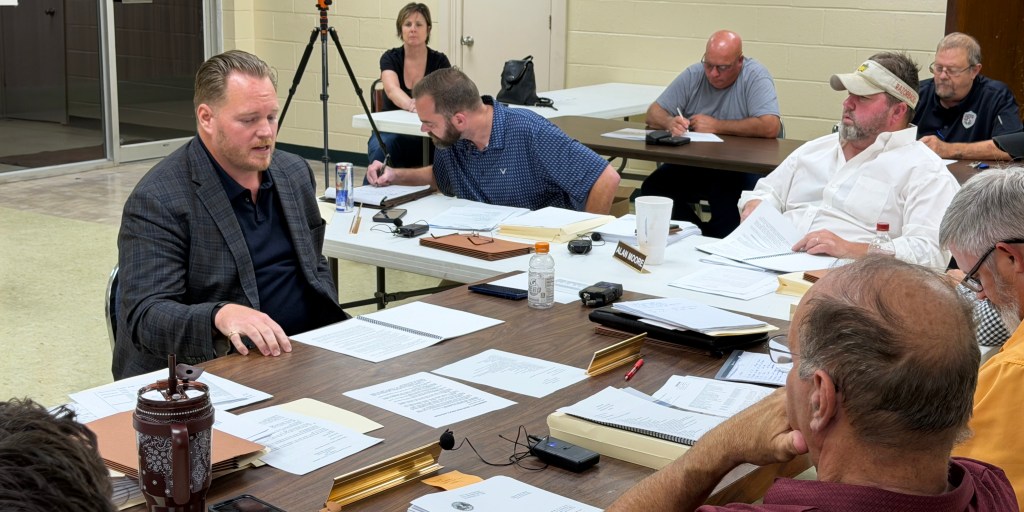
The Arkansas Game and Fish Commission met Thursday (April 16) at the University of Arkansas at Monticello and unanimously approved a regulations package incorporating more than 200 changes to the AGFC Code of Regulations.
Those changes included many modifications to deer hunting limits and seasons as well as the upcoming 2026-27 and 2027-28 Arkansas waterfowl season dates.
Different Rules for Deer
Hunting and wildlife management regulations changes included the elimination of outdated regulations or the combination of many regulations to streamline things for hunters.
Notable changes in deer seasons include:
- Adding the early archery buck-only season on Maumelle River WMA, UA Pine Tree WDA, and all cooperative WMAs owned by the Arkansas Natural Heritage Commission and U.S. Forest Service.
- Rescheduling the three-day early archery buck-only season to begin the last Saturday in August.
- Adjusting deer seasons and bag limits on most WMAs to be more uniform, with each WMA having a seasonal bag limit of no more than three deer, no more than two of which being bucks. (Hunters may travel to other zones or WMAs to complete their statewide bag limit of six deer, no more than two bucks.)
- Adjusting private land deer zones to have a seasonal limit of four deer. (Again, hunters may complete their six deer statewide bag limit by hunting in another zone or WMA.)
- All deer will count toward a hunter’s seasonal limit as either “antlered bucks” or “antlerless,” regardless of the zone they are harvested from. Button bucks will not count against a hunter’s two-buck seasonal limit.
- Modern centerfire firearms are now allowed for deer hunting in Private Land Deer Zones 4 and 5.
- Grant and Sevier counties are now listed within the Chronic Wasting Disease Management Zone and hunters must follow all CWD regulations concerning transport of deer taken in these counties.
- Dogs pursuing deer, fox or coyote on public land are required to wear collars capable of GPS positioning as well as electronic correction.
Waterfowl-based Modifications
As presented in the public comment surveys earlier this year, the AGFC has continued to modify access and hunting regulations on a few of its more popular waterfowl hunting-focused WMAs to reduce hunter conflicts and continued complaints about crowding on popular hunting areas.
The following changes are a few of the more notable for the upcoming 2026-27 waterfowl hunting season:
- New “non-motorized boat only” access areas will be established on portions of George H. Dunklin Bayou Meto WMA, Dave Donaldson Black River WMA and Shirey Bay Rainey Brake WMA.
- All of Galla Creek WMA will now be “non-motorized boat only” access.
- Waterfowl permit hunt opportunities will be established on all moist-soil units within Ed Gordon Point Remove WMA beginning with the 2027-28 waterfowl season.
- Waterfowl permit hunt opportunities will be established at Prairie Bayou WMA, Buckingham Flats Greentree Reservoir on Bayou Meto WMA and the Wiville West Unit of Rex Hancock Black Swamp WMA.
- A valid Arkansas hunting license and state duck stamp are now required to participate in the light goose conservation order.
- Non-residents will be prohibited from waterfowl hunting at Dave Donaldson Black River WMA during the first segment of regular duck season (Nov. 21-29, 2026).
Maps of the new non-motorized boat access areas and permit hunt areas will be published on AGFC.com as waterfowl season draws near.
Luke Naylor, Wildlife Management Division chief, noted that a separate regulation to increase the allowed horsepower of surface drive motors on certain WMAs from 37 hp to 40 hp was tabled following public comment and discussion by the Commission in March.
The Commission also finalized the hunting season dates for the 2026-27 waterfowl hunting season as well as preliminary season dates for 2027-2028. The 2026-27 Waterfowl Season Hunting Dates are as follows:
- Duck, Coot and Merganser: Nov. 21-29, Dec. 10-23, and Dec. 26, 2026-Jan. 31, 2027
- Canada Goose: Sept. 1-Oct. 15, Nov. 21-29, Dec. 10-23, and Dec. 26, 2026-Jan. 31, 2027
- White-fronted Goose: Oct. 31-Nov. 8, Nov. 21-29, Dec. 10-23, and Dec. 26, 2026-Jan. 31, 2027
- Snow, Blue and Ross’s Goose: Oct. 31-Nov. 8, Nov. 21-29, Dec. 10-23, and Dec. 26, 2026-Jan. 31, 2027
- Veteran, Active-Duty Military and Youth Waterfowl Hunt: Feb. 6-7.
The 2027-28 waterfowl seasons will reflect the same timing as 2026-27, with only slight adjustments for calendar creep (dates will correspond with the same days of the week as 2026-27).
Commissioner Philip Tappan of Little Rock pointed out the season dates for next year’s waterfowl season should be seen more as placeholders for planning, but the Commission still wanted to revisit the possibility of shifting those dates after the conclusion of this year’s duck season.
Fishing changes
Tommy Laird, Fisheries Division chief, walked through a host of regulations changes at the Arkansas Game & Fish Commission meeting held April 16 at the University of Arkansas at Monticello.
“These changes aren’t just the results of a few months of ideas; they are the culmination of, in some cases, years of monitoring and research as well as gathering comments from the public,” Laird said. “Two of the regulations changes in fishing this year are the direct result of public comments. The reduction of the time anglers must be within sight of their passive fishing devices to daytime only and the addition of snag lines and trotlines to the recreational netting tackle came from the public. They made great sense without any large impact to the resource, so we moved those forward this year.”
Changes for fishing regulations included the following:
- Establish catch-and-release fishing only for the newly renovated Lake Wilhelmina to reestablish game fish populations.
- Establish a one fish, 15-inch minimum length limit for smallmouth bass in 10 newly designated Smallmouth Bass Blue Ribbon Streams (Buffalo River, Caddo River, Crooked Creek, Current River, Eleven Point River, Illinois River, Kings River, Spring River, War Eagle Creek and White River).
- Allow a temporary exemption to the agency’s drain plug removal requirement for anglers transporting a fish for weight verification for the Legacy Lunker program.
- Reduce the time an angler must be within hearing or sight of their passive fishing gear (jugs, yo-yos, limblines) to include only daylight hours. The fishing gear may now be unattended from sunset to sunrise.
- Allow owners of recreational netting tackle permits to use snag lines and trotlines under that permit.
- Increase the amount of tackle allowed with Commercial Tackle Tags from 100 feet to 100 yards.
- Allow bowfishing tackle for alligator hunting on private land during the open alligator season.
“These changes aren’t just the results of a few months of ideas; they are the culmination of, in some cases, years of monitoring and research as well as gathering comments from the public,” Laird said. “Two of the regulations changes in fishing this year are the direct result of public comments. The reduction of the time anglers must be within sight of their passive fishing devices to daytime only and the addition of snag lines and trotlines to the recreational netting tackle came from the public. They made great sense without any large impact to the resource, so we moved those forward this year.”
Laird also highlighted that many of the changes were the elimination of regulations to simplify things for hunters and anglers.
“We were given a mandate to reduce the complexity of our regulations,” Laird said. “We looked at areas where there were already state laws in place to cover the situation, regulations that had become outdated with technology advancements, and regulations that hadn’t seen any citations or warnings in the recent past to identify rules that are unnecessary.”
Commission Chairman Anne Marie Doramus of Little Rock took a moment to recognize the other commissioners, staff and public who all participated in the regulations change process.
“We do our regulations every two years, but as soon as we wrap this up, we’re already beginning our next cycle that will be voted on in 2028,” she said. “We receive many emails and phone calls that we take at all hours of the day, and we listen to these people. We evaluate their concerns, and we respond. … A lot of those phone calls we get, if we can’t answer them, we pass them on to [AGFC staff], and y’all are gracious enough to take time out of your very busy day to talk to the public because it’s part of our mission statement, ‘…public understanding and support.’”